June 12, 2026
How to Choose Your First Orchid: A Beginner's Guide
Learn what to check before buying a healthy Phalaenopsis: roots, leaves, crown, flower spikes, blooms, and warning signs.
By Vigi
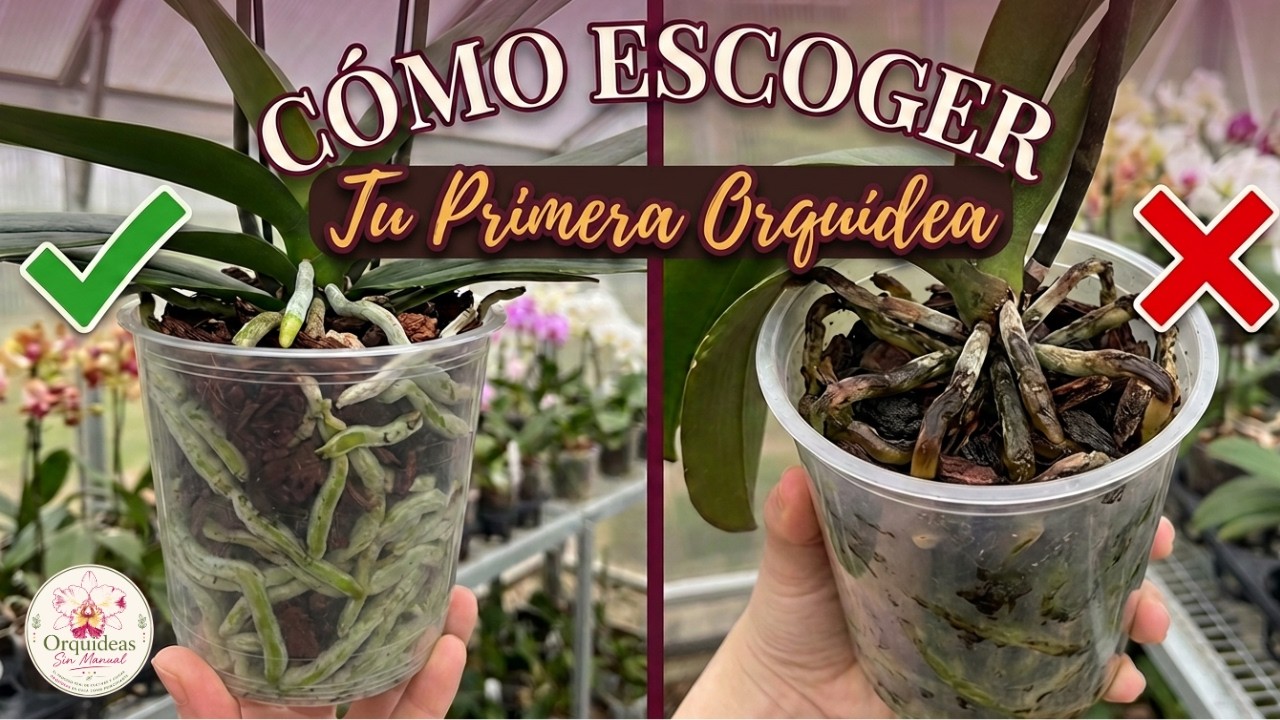
Buying your first orchid can feel exciting, but it can also feel intimidating. It is normal to look first at the prettiest flower in the store, even though a spectacular bloom does not always mean the plant is healthy.
Before bringing a Phalaenopsis home, it helps to check a few simple signs. The goal is not to find a perfect plant, but a strong orchid with a healthy root system and no obvious problems from the start.
1. Start with the roots
Roots are the most important part to check when choosing an orchid. They do more than absorb water: they also help the plant breathe, anchor itself, and store moisture.
Look for a plant with plenty of visible, firm roots inside the pot. They may look green when hydrated, or silver and grayish when drier. What matters is that they have substance and look alive.
Avoid buying an orchid if you notice:
- Black, brown, or yellow roots.
- Flat, hollow, or deeply grooved roots.
- Very few visible roots in the pot.
- Clear signs of rot or severe dehydration.
A useful trick is to lift the plant very gently from the base. If the orchid stays firmly attached to the potting mix and does not slide out of the pot, that is a good sign.
2. Check the central crown
Phalaenopsis orchids are monopodial: they grow from one central crown, where leaves and roots emerge. That crown should look clean, firm, and healthy.
Avoid plants with black spots, yellow areas, soft tissue, or pest signs near the center. A damaged crown can become a serious problem after you bring the plant home.
3. Look closely at the leaves
Leaves reveal a lot about the overall health of the plant. A healthy orchid should have green leaves that feel firm and sturdy to the touch.
It is also worth checking the size of the newest leaves. If the most recent leaves are getting smaller than the older ones, it can point to low light, low nutrients, or stress.
Avoid plants with:
- Soft or wrinkled leaves.
- Repeated black spots.
- Suspicious yellow dots.
- Yellowing that starts from the base of the leaf.
- A yellow middle leaf while the rest remain green.
An older leaf turning yellow from the tip can be part of the plant’s natural cycle. But if yellowing begins at the base or appears on middle leaves, it is better to choose another plant.
4. Look for pest signs
Before buying, look carefully between the leaves, near the crown, and underneath each leaf. Pests can hide in small spaces and go unnoticed if you only check the flowers.
Watch for:
- Tiny white dots.
- Very fine webbing.
- Insects hidden under the leaves.
- Strange marks or sticky areas.
- Moving reddish or whitish dots.
If you see anything suspicious, leave that plant behind. It is better to wait and choose a clean orchid than risk the rest of your collection.
5. Notice where flower spikes emerge
Flower spikes should emerge from the sides between the leaves, not from the center of the plant. If a spike grows from the center, the orchid may stop producing new leaves, which can compromise future growth.
A plant with two or three flower spikes can be a good choice if the rest of the plant is healthy. You may also find secondary spikes, which branch from the main spike and can produce more flowers.
6. Now choose the flowers you love
After checking roots, crown, leaves, and spikes, you can enjoy the fun part: choosing the flower color and shape you like.
Still, make sure the flowers do not have black spots. These spots often appear when water lands on the bloom and fungi develop.
It is also best to avoid artificially dyed orchids, especially many of the intense blue ones sold in stores. In most cases they are white Phalaenopsis orchids injected with dye, and the next bloom will probably be white.
7. The 70-80% open flower trick
If you can choose, look for an orchid with about 70-80% of its flowers open.
That way, you enjoy flowers from the first day while still having buds left to open. It also reduces the risk of losing many buds from the stress of changing environments.
It is normal for an orchid to lose a bud or two after arriving home. Changes in light, temperature, humidity, and placement can affect blooming. What matters most is that the base plant is healthy.
Quick checklist before buying
Before checkout, confirm:
- Abundant, firm, visible roots.
- A clean crown with no spots or soft areas.
- Green, firm leaves.
- No visible pests.
- Flower spikes emerging from the sides, not the center.
- Flowers without black spots.
- Buds and flowers in good overall condition.
Starting with a healthy orchid makes all the difference, especially when you are learning from scratch. A strong plant gives you more room to understand its rhythms, adjust watering, and enjoy the process without going into emergency mode from day one.