September 18, 2026
Phalaenopsis Care After Flowers Fall
What to do with a Phalaenopsis flower spike after blooming and how to support the plant through its next growth stage.
By Vigi
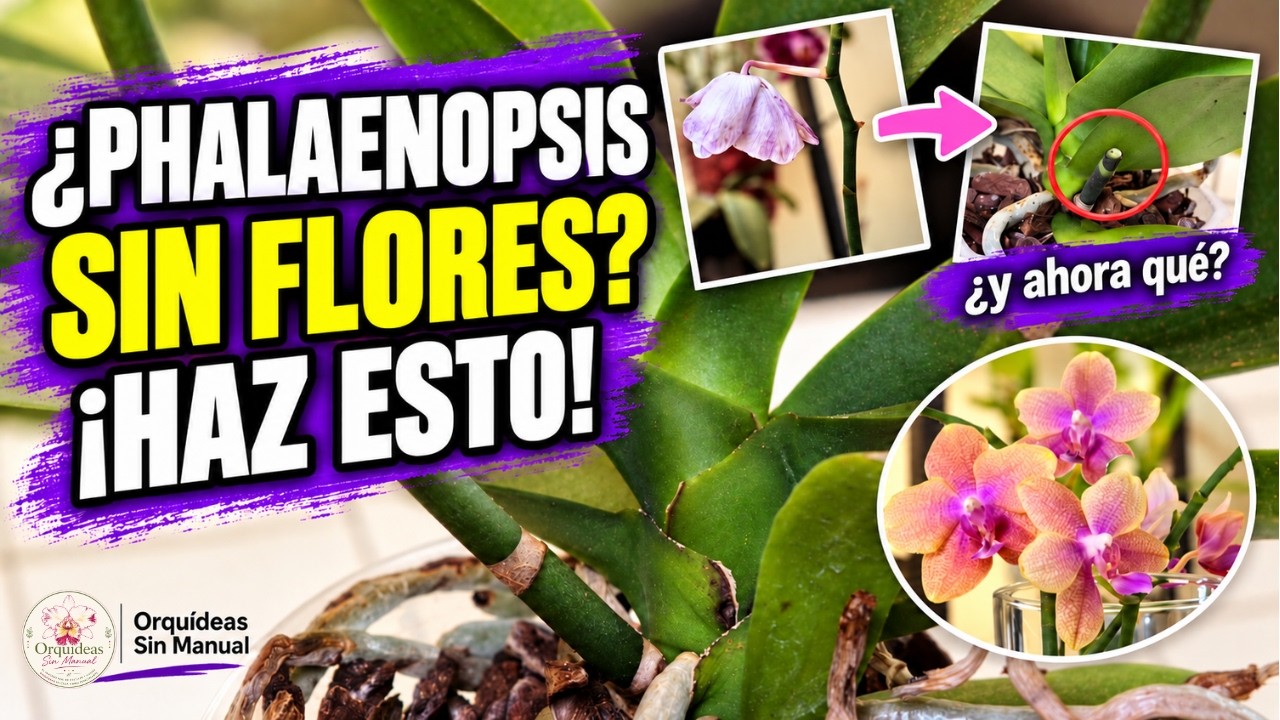
When a Phalaenopsis loses its last flower, it is not dying and its life cycle has not ended. The blooming period has finished, and the plant can now focus on leaves, roots, and restoring energy for its next cycle.
🌸 Before deciding: look at the spike and the plant
Once the flowers fall, two common questions remain: whether to cut the flower spike and whether the plant needs different care. The video presents two spike options; neither is automatically wrong. The choice depends on whether the spike is still green, the overall condition of the Phalaenopsis, and whether you want to prioritize another bloom or vegetative growth.
Before cutting, check that the plant is healthy and look at the spike’s color. A yellow, brown, or drying spike will not flower again, while a fully green one may still have nodes with dormant buds.
✂️ Option 1: keep part of a green spike
With an adult, healthy Phalaenopsis that has a good root system, you can keep part of a green spike to leave open the possibility of a side spike, a second bloom, or occasionally a keiki. A green spike does not guarantee any of these outcomes: the plant will decide whether a bud becomes active.
To try this, the video shows leaving one or more nodes and cutting about one centimetre above a healthy node. Use disinfected scissors or cutting tools and make a clean cut. If cinnamon is used, apply only a very small amount to the cut surface; the cut can also simply be kept clean and dry.
The buds sit beneath a thin bract. Removing it is not necessary for the plant to activate a bud naturally. Some people remove it to apply keiki paste, aloe, or other products, but the video stresses that this is not essential: a bud may produce a side spike, a keiki, or no visible change, and all three can be normal.
A second bloom from an older spike also takes effort from the plant and may be smaller than the first. This option is therefore best reserved for a strong plant.
🌱 Option 2: cut the spike to prioritize growth
If the spike starts turning yellow or brown, or begins to dry, it can be cut near the base while leaving a small margin so the main stem is not approached too closely. There is no need to preserve a node when the whole spike is dying; disinfect the tool again and make a clean cut.
You may also choose to cut a spike that is still green. The video prefers this route when the goal is to let the plant direct its resources toward new roots, new leaves, and a stronger future flowering cycle. It is especially sensible if the Phalaenopsis is weak, has few roots, or has recently had a problem: recovery takes priority.
There is no need to wait for every last flower to fall. If one or two remain, the spike can be cut and placed in a small vase of water so you can continue enjoying the flowers while the plant enters its next stage.
🔎 Inspection and repotting after flowering
Once the spike decision is made, do not put the plant in a corner until it blooms again. Check the leaves for firmness and look for new leaves, marks, or unusual signs. Inspect the crown, leaf axils, and especially the roots. Vegetative growth often starts before blooming has completely finished; green root tips and new leaves are encouraging signs.
The end of flowering does not make repotting mandatory. If the potting mix is in good condition, the pot is suitably sized, and the roots are healthy, the plant can stay where it is. Degraded mix, excessive moisture retention, damaged roots, or the need for a different pot are reasons to consider repotting. It can be an even better time when new roots are beginning to grow. With an urgent problem, such as rotten roots or completely degraded mix, there is no need to wait.
💡 Care continues without flowers
The lack of flowers does not mean the Phalaenopsis needs less care. Continue providing bright, indirect light: moving it into a corner just because it has finished blooming can limit the energy it needs to make leaves and roots.
Watering does not change to a calendar after the flowers fall. Observe the roots and mix, water thoroughly, let it drain completely, and water again when the mix is dry and the plant indicates it needs hydration. During active growth, a balanced orchid fertilizer can be used at an appropriate concentration; the video recommends gentle, regular feeding rather than high doses that could burn roots.
🎬 Key moments in the video
- 00:00: falling flowers and the start of a new stage.
- 00:58: the two flower-spike options.
- 01:36: keeping a green spike and its nodes.
- 04:48: cutting a dry spike or prioritizing vegetative growth.
- 06:04: the possibility of a keiki after cutting the spike.
- 06:19: checking leaves, crown, and roots.
- 07:06: when to consider repotting.
- 07:59: light, watering, and fertilizing after flowering.
The next bloom is prepared during these months of growth. Observe the actual condition of your Phalaenopsis, choose the priority that fits that plant, and maintain its basic care. For more on repotting, see our step-by-step Phalaenopsis repotting guide; for watering, read how to water a Phalaenopsis correctly.