July 25, 2026
Phalaenopsis Mini Mark: Basic Care and Repotting
Phalaenopsis Mini Mark care and repotting guide covering dehydrated roots, potting mix, flowering, light, watering, and temperature.
By Vigi
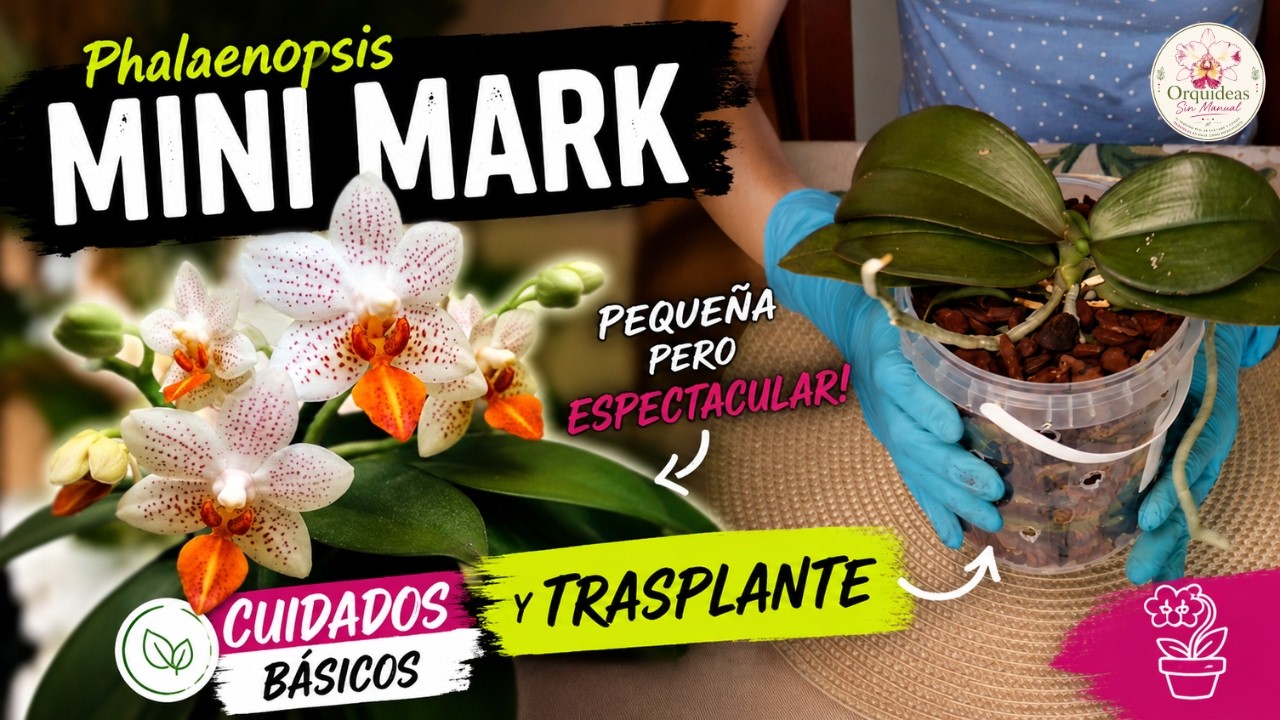
Phalaenopsis Mini Mark is compact, but it needs the same fundamentals as any Phalaenopsis: good light, careful watering, airy roots, and a mix that does not stay waterlogged.
What to check during repotting
Before changing the pot, inspect the condition of the mix and roots. Remove degraded material, cut only dead or rotten roots with a clean tool, and choose a pot that fits the root system.
After repotting, place the orchid somewhere bright but protected from strong direct sun, and wait until the mix has partly dried before watering again. With a small plant, controlling excess water is especially important.
After repotting
The video recommends bright light without direct sun, watering when the mix is completely dry, regular fertilizing, approximately 60–80% humidity, and good airflow. It gives 20–25 ºC during the day and 17–19 ºC at night as reference temperatures, while avoiding below 15 ºC or above 30 ºC.
Basic care
Mini Mark needs plenty of brightness, but not intense direct sun. Water when the mix has dried enough and the roots show that the plant needs it; do not follow a fixed calendar. Air movement helps prevent trapped moisture, and fertilizer should be used moderately.
Its compact size does not mean it should live in an oversized pot or a mix that stays wet for too long. An airy mix and a well-draining pot make recovery and new root growth easier.
After working on the roots, give the orchid a few stable days. Observe the leaves, roots, and mix before making another change.
The plant arrived severely dehydrated, with gray ridged roots, dry mix, and marked leaves. Three months later, after recovery and flowering, it was producing a new leaf. That active growth was the signal chosen for repotting.
Its white flowers have small orange spots and a brick-orange lip. The video explains that it is a hybrid of Phalaenopsis philippinensis, P. maculata, and P. lobbii. The mix combines New Zealand radiata pine bark, New Zealand sphagnum moss, and a small amount of charcoal.
Continue with the Phalaenopsis care guide and First Steps After Buying an Orchid.